Roof Repair
Limb strikes patched, clogged valleys cleared and resealed, and dormer and gable leaks on older bungalows traced back to where the water actually gets in.
Roof repair →
Atlanta roofs live under one of the heaviest tree canopies of any American city, and on a hundred-year-old bungalow that canopy decides more about the roof than the shingle brand ever will.
Good roofing in Atlanta starts with looking up before looking at the roof. The city calls itself a city in a forest for a reason: oaks, poplars and pines tower over streets that were laid out long before anyone planned for a forty-foot limb above the kitchen.
That canopy works on a roof in three ways. Leaves and pine straw pack into valleys and gutters and hold water against the shingles. Shade keeps north-facing slopes damp long after a storm, which feeds algae and moss. And when wind comes through, it is limbs rather than the wind itself that do most of the damage.
None of that means the trees have to go. It means an Atlanta roof needs to be judged with the trees in mind: which slopes stay wet, where debris collects, and which overhanging branches are close enough to rub or drop onto the deck in the next thunderstorm.
Atlanta’s older neighborhoods are full of early-1900s bungalows: wide front gables, dormers, deep eaves and attics that were never designed to be ventilated the way a modern roof expects. Many have had the attic finished into living space, which leaves little room for air to move under the deck. Heat and humidity trapped there age the shingles from below every Georgia summer.
The mid-century ranches that fill much of the rest of the city are simpler roofs, long and low, but they are often on their third or fourth roof. Each replacement is a chance for someone to have skipped the decking or reused old flashing, and the only honest way to know is to take it all off and look.
Then there are the new townhomes going up across the city. Attached units share one long roofline divided at the party walls, and a leak at one unit’s wall can show up in the neighbor’s ceiling. Repairs on these need to respect where one owner’s roof ends and the next begins, and often an HOA’s say on color and product.
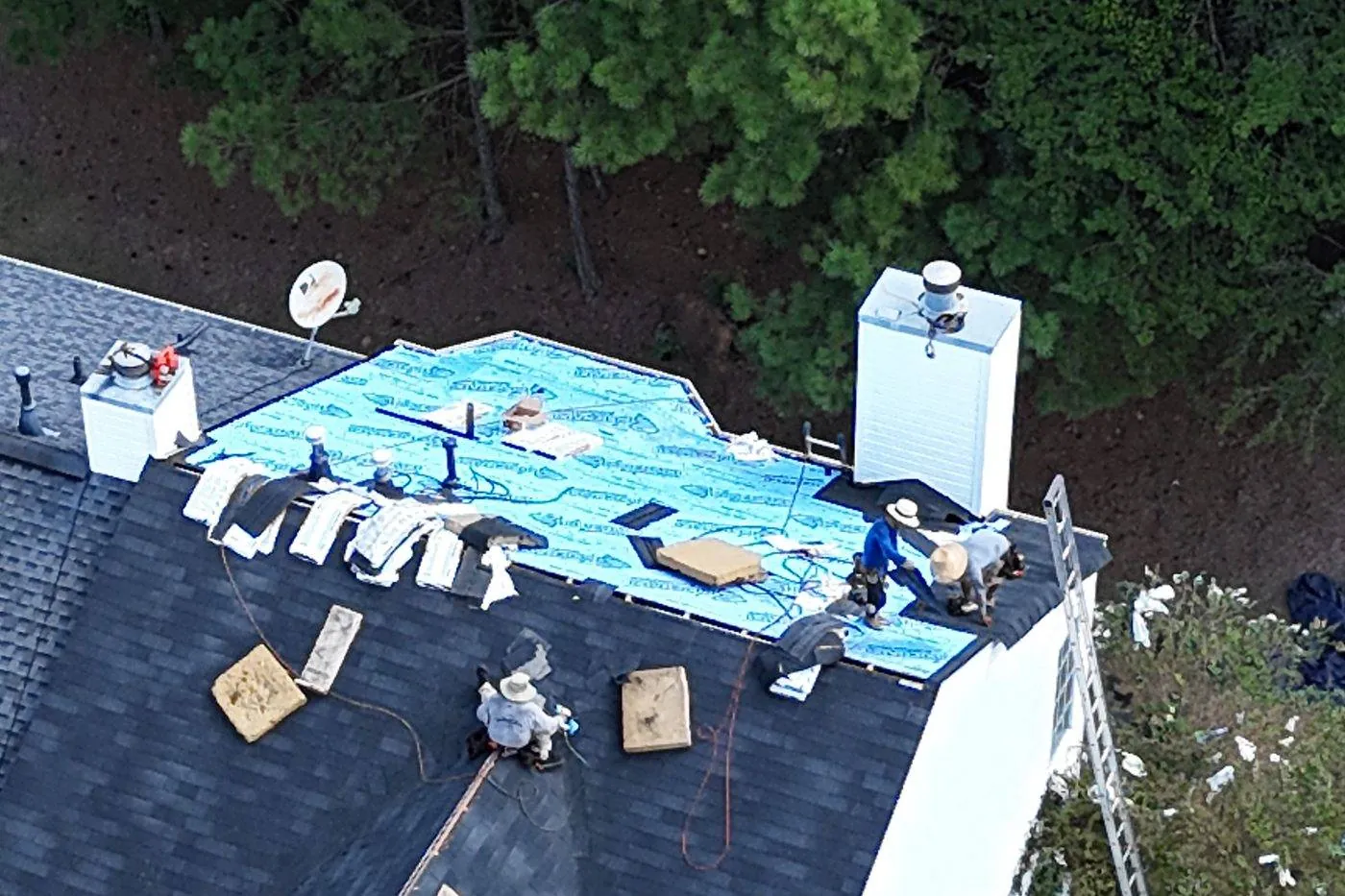
Every replacement starts with a full tear-off, never a new layer over an old one. On an Atlanta house that has been reroofed several times, that is the moment soft or rotted decking comes to light, and it is replaced before a single new shingle goes down.
Underlayment, drip edge, ice and water shield at the valleys and transitions, new pipe boots and resealed flashing all go on with it, and we check the attic ventilation while the roof is open. Around 95% of our replacements are finished in a single day, backed by a lifetime workmanship warranty.
Limb strikes patched, clogged valleys cleared and resealed, and dormer and gable leaks on older bungalows traced back to where the water actually gets in.
Roof repair →Old layers stripped back to the deck on houses that have been reroofed more than once, then rebuilt with the ventilation a finished attic needs.
Roof replacement →Hail and wind damage photographed slope by slope after a thunderstorm crosses the city, and a RoofMax USA inspector present when your adjuster walks the roof.
Storm damage →We work across the city inside I-285: the bungalow streets of Virginia-Highland, Kirkwood and Grant Park, the mid-century ranch neighborhoods between them, and the townhome developments filling in older lots. Fulton or DeKalb, the inspection is the same.
Atlanta is roughly thirty to forty minutes down GA-400 from our Alpharetta base, so a visit is usually possible the same day or the next. If a limb has come through the roof or water is coming in, say so when you call and it goes to the front of the line.
Spring and summer thunderstorms bring both hail and straight-line wind into the city, and the damage they leave on an Atlanta roof is often mixed. Hail bruises shingles and dents gutters and vents; wind snaps limbs that land on the roof hours or days later. An insurer will want each kind of damage documented separately and tied to the storm.
Our Haag-certified inspectors photograph impacts, lifted or creased tabs and any punctures from debris, and we put it in a written report you keep whether you hire us or not. When the adjuster visits, we attend with you. See hail damage repair for how that process runs.
Neighborhoods to the north of the city share the same storms and similar canopy, but with a different housing mix; our page on roofing in Sandy Springs covers that side of the Perimeter.
It depends on the size and pitch of the roof, how many layers have to come off, how much decking turns out to be soft, and the product you choose. Older Atlanta houses with dormers and several past reroofs usually involve more of all of these. The inspection and written report are free, so you get a figure based on your actual roof.
Keep everyone out of the rooms beneath it, photograph the damage from the ground, and call us. We can cover the opening to stop more water getting in and document the damage for your insurer. Removing the limb itself is usually a job for a tree service.
If the leak was caused by a sudden event like hail, wind or a falling limb, it is often covered. Leaks from age and gradual wear generally are not. Our report sets out which one you are dealing with, and we attend the adjuster visit with you.
Usually, yes. We work to the party wall and seal the joint properly so your repair does not create a new leak next door. If the damage runs across both units, it is worth both owners, or the HOA, knowing before work starts.
Yes. The inspection, the photographs and the written report cost nothing and commit you to nothing, inside the Perimeter or anywhere else we work.
Usually the same day or the next. If water is coming in or a limb is on the roof, call rather than emailing so it can be prioritized.
Storm damage isn’t always visible from the ground. We’ll document what we find, walk you through the report, and tell you honestly whether you need a repair, a replacement, or nothing at all.