
Drying window from the EPA’s guide to mold, moisture and your home (updated February 18, 2026).
To fix a leaking roof so it stays fixed, you have to repair the place where water gets in, which is rarely the spot above the stain on your ceiling. Water enters at a failure point, runs along the underside of the decking or down a rafter, and drips through wherever gravity finally wins. Patch the wrong spot and the leak comes back in the next long rain.
This guide covers what to do the day you find a leak, how to trace it back to its source, which fixes last and which only buy time, and when the job belongs to a roofer. If you would rather have it traced for you, our roof leak repair page explains how we find the entry point; the inspection is free.
What’s in this guide
- What to do when your roof is leaking
- How to find where the leak starts
- The usual causes, and the fix that lasts
- Temporary fixes: what they can and can’t do
- Can you fix a roof leak yourself?
- Why a leak can’t wait in Georgia
- How we fix a leaking roof
- Roof leak questions
What to Do When Your Roof Is Leaking
The first job is protecting the inside of the house, not the roof. In order:
- Contain the water. A bucket under the drip and towels around it stop it spreading into flooring and baseboards.
- Deal with a bulging ceiling. If water has pooled above the drywall and the ceiling is sagging, that weight will come down on its own. Puncturing the lowest point with a screwdriver, bucket underneath, drains it in a controlled way and often saves the rest of the ceiling.
- Move things and cut the power to wet fixtures. Furniture, rugs and electronics out of the path. If water is near a light fixture, switch that circuit off at the breaker rather than touching the fitting.
- Photograph everything, with the date. The wet ceiling, the attic if you can reach it safely, and anything damaged. If a storm caused the leak, these photographs are what an insurance claim will rest on.
- Stay off the roof. A wet roof is slippery, and storm-weakened decking can give way without warning. A damaged ceiling is a far better outcome than a fall.
If water is coming in faster than you can contain it, the fix for today is a tarp, fitted by someone with the equipment to do it safely. Georgia’s Insurance Commissioner gives the same advice after storms: cover the roof with a tarp if it is safe to do so, save every receipt, and leave significant repairs to the experts. Our emergency roof tarping page explains how a tarp should be fitted so it doesn’t blow loose in the next gust.
How to Find Where the Leak Starts
This is the skilled part of any roof leak repair, and the reason so many leaks get repaired twice. This Old House’s guide to patching a roof leak starts in the same place we do: the attic.
- Start inside, uphill of the stain. With a flashlight, look for wet or shiny spots, dark stains or mold on the underside of the decking and along the rafters. Follow the trail uphill. Step only on the joists, never the drywall between them.
- Look at what passes through the roof. Plumbing vents, exhaust fans, the chimney and skylights are where most leaks start, not the open field of shingles.
- Note the weather when it leaks. A leak that only appears in wind-driven rain from one direction points to a different detail than one that drips in any steady rain.
- Test with a hose, if it won’t show itself. One person runs water over one section of roof at a time, working up from the bottom, while another watches inside. It is slow, and it only works when you can reach the roof safely.
Water can travel several feet along the decking before it drips, further on a low-pitch roof. That is why the repair goes where the evidence leads, not where the stain is.
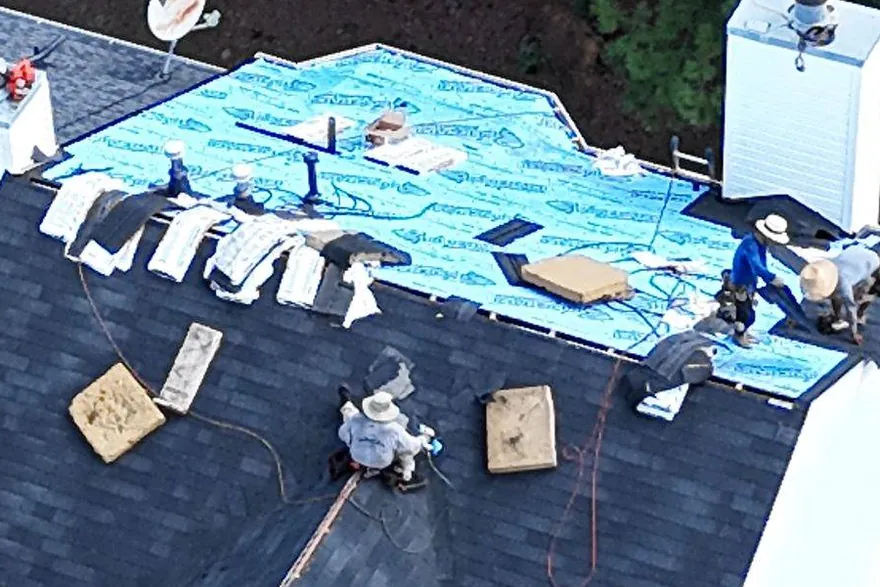
The Usual Causes, and the Fix That Lasts
Once you know where the water gets in, the lasting fix is usually straightforward. These are the causes we see most, roughly from cheapest to dearest:
| Cause | What you’ll see | The fix that lasts |
|---|---|---|
| Split pipe boot | A stain near a bathroom or kitchen vent; cracked rubber around the pipe | A new boot over the pipe, with the shingles around it resealed |
| Nail pop | A small lump under a shingle; a drip in a random spot | Pull or reset the fastener, seal it, replace the shingle if it’s torn |
| Damaged or missing shingle | Gaps, creases or lifted tabs after wind | A matching replacement shingle, nailed and sealed |
| Failed flashing | A leak where the roof meets a wall, chimney or skylight | New step or counter-flashing woven in with the shingles |
| Valley | A leak below where two slopes meet; debris packed in the channel | Clear it and rebuild the valley where it has worn through |
| Clogged gutters | Staining at the top of an exterior wall or the soffit | Clear the gutters; repair the roof edge if water has backed up under it |
Flashing is easy to get wrong. This Old House’s roof leak guide quotes Norm Abram warning against a single continuous strip along a roof-to-wall joint: individual pieces of step flashing should be woven between each course of shingles so water runs over them, not under. A smear of sealant along that joint is not the same repair.
Wondering what each of these costs? Our guide to roof repair estimates sets out the published price ranges, including for leaks.
Temporary Fixes: What They Can and Can’t Do
Roofing cement, a can of rubberized sealant, a tarp: all of them have a place, and all of them are stopgaps.
- A tarp stops water coming in through an opening while you arrange a proper repair. It needs to run well past the damage and over the ridge if the damage is near the top, or water runs under its upper edge. Sun and wind wear it out in weeks, not months.
- Sealant can close a crack in flashing or cover a nail head until the detail is replaced. This Old House calls sealant on chimney flashing “only a stopgap” and warns that big beads or lumps of it can actually divert water somewhere new.
- Spray-on and tape products can slow a drip on a small, dry, reachable spot. They don’t replace a split boot or a failed flashing, and sealant smeared over a roof can make the next repair harder.
A permanent repair also needs a dry surface for the sealants and adhesives to bond. That is why a leak found in a storm gets made safe first and fixed properly once the weather allows.
Can You Fix a Roof Leak Yourself?
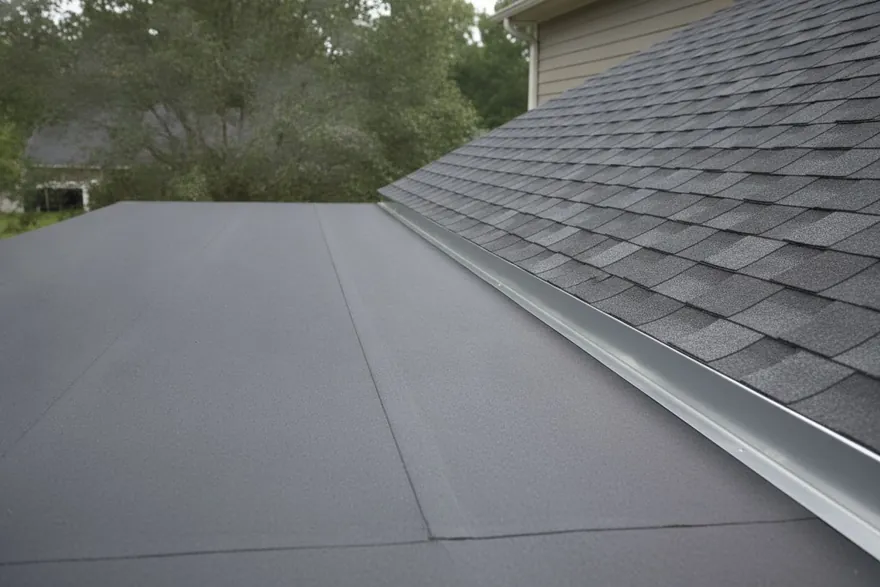
Some homeowners can, on a low, single-story roof, with a sound ladder and a cause they have actually found. This Old House walks through replacing a shingle or a vent boot, and its advice on safety is plain: set the ladder on level ground, extend it at least 3 feet above the roofline, and call a professional if the roof is steep, more than one story or feels unstable.
Call a roofer instead when:
- You can’t find the source, or the leak has already been patched once and come back.
- The roof is steep, two stories or higher, or wet.
- The roof is metal, tile or slate. This Old House recommends a contractor experienced with that material.
- The leak is at flashing that runs under siding or brick.
- A storm caused it. Walking a storm-damaged roof can muddle storm damage with foot traffic and complicate an insurance claim.
- Your shingles are still under a manufacturer’s warranty. DIY repairs can void some warranties, so check the terms first.
A handyman can replace a shingle. Tracing a leak that travels along the decking, or rebuilding a valley or a flashing detail, is roofing work, and it is the difference between fixing the leak and fixing a spot the water was passing through.
Why a Leak Can’t Wait in Georgia
A leak that only shows in heavy rain feels like a low priority. It isn’t, because the stain on the ceiling is the last stage of a process that has been running for a while.
- Mold. The EPA says water-damaged areas and items should be dried within 24 to 48 hours to prevent mold growth, and lists roof leaks among the causes of hidden mold above ceilings. In a Georgia summer, a damp enclosed cavity in the attic is close to ideal conditions for it.
- Decking and insulation. Water soaks the decking first, then the insulation below. Wet insulation stops insulating, and wet decking loses strength until it has to be replaced, turning a small repair into a partial rebuild.
- Trees. Heavy tree cover across the north metro fills valleys and gutters with leaves and pine needles, which hold water against the roof.
- Storms. Spring and summer storms bring hail and wind. A leak that starts after one may be storm damage, and our guide to the hail damage roof inspection covers what to check before you call your insurer.
The gap between a split pipe boot and a repair involving decking, insulation and drywall is usually a matter of seasons rather than years.
How We Fix a Leaking Roof
We trace every leak to where it starts. We get on the roof and into the attic where access allows, photograph what we find, and give you the cause, the recommended fix and the cost in writing before anything starts. Most repairs are finished in a single visit, often the day we assess them, and we magnet-rake the working area for nails before we leave.
If the roof is open and weather is coming, we tarp it first. If the roof has reached the point where repairing it is throwing money at it, we’ll say so plainly; if one detail has failed on a roof with years left, we fix that one detail.
We fix roof leaks across the north metro, usually the same or next day in Alpharetta, Roswell, Milton, Johns Creek, Cumming, Sandy Springs and Duluth. Book a free leak inspection or call (770) 676-1385; if water is coming in now, call rather than using the form.
Sources checked November 17, 2026: This Old House, How to Patch a Roof Leak (updated May 26, 2026); This Old House, How To Find and Fix a Roof Leak (updated June 5, 2026); EPA, A Brief Guide to Mold, Moisture and Your Home (updated February 18, 2026); Georgia Office of Commissioner of Insurance and Safety Fire, storm tips (October 29, 2020).
Roof Leak Questions
What should I do when my roof is leaking?
Contain the water with a bucket and towels, move belongings out of the way, switch off power to any wet light fixture at the breaker, and photograph everything with the date. Stay off the roof. If water is coming in faster than you can contain it, get the roof tarped by someone with the equipment to do it safely.
What is the best way to fix a leaking roof?
Find where the water gets in, then repair that detail properly: a new pipe boot, a replacement shingle, new step flashing or a rebuilt valley. Water runs along the decking before it drips, so the entry point is often several feet from the stain. A patch over the stain is why so many leaks come back.
Who is the best person to fix a leaking roof?
A roofer who will trace the leak to its source and tell you the cause, the fix and the cost in writing before starting. A handyman can replace a shingle, but tracing a leak and rebuilding flashing or a valley is roofing work.
Can Flex Seal stop roof leaks?
Spray and tape sealants can slow a drip on a small, dry spot you can reach safely, but they are a stopgap. They don't replace a split pipe boot or failed flashing, and sealant spread across a roof can make the proper repair harder.
Can you fix a roof leak from the inside?
You can find it from the inside, and you can contain the damage there, but the repair itself has to be made on the outside where water gets in. Look in the attic for wet or dark decking and follow the trail uphill from the stain.
How much does it cost to fix a leaking roof?
This Old House puts most roof leak repairs at about $100 to $1,500. A split pipe boot sits at the low end; a failed valley or a leak that has rotted the decking sits at the high end. With RoofMax USA, the inspection and written estimate are free.