
Based on the National Weather Service hail size guide and the Insurance Institute for Business & Home Safety.
A hail damage roof inspection is a close look at every slope of your roof after a hailstorm, to find out whether the hail actually damaged the shingles and, if it did, to document it well enough for an insurance claim. It matters because hail damage rarely looks like anything from the driveway. A roof can be watertight the day after the storm and still have lost years of its life.
This guide covers what hail does to a shingle, what you can safely check yourself, what a proper roof inspection after a hail storm involves, and the timing that decides whether a claim is still possible. When you are ready for a professional look, our page on hail damage roof repair explains how we assess it, and the inspection is free.
What’s in this guide
- What hail does to a roof
- How big does hail need to be?
- What you can check from the ground
- What a hail damage roof inspection involves
- Hail damage or something else?
- Why timing matters
- Who to call after a hailstorm
- Hail damage roof inspection questions
What Hail Does to a Roof
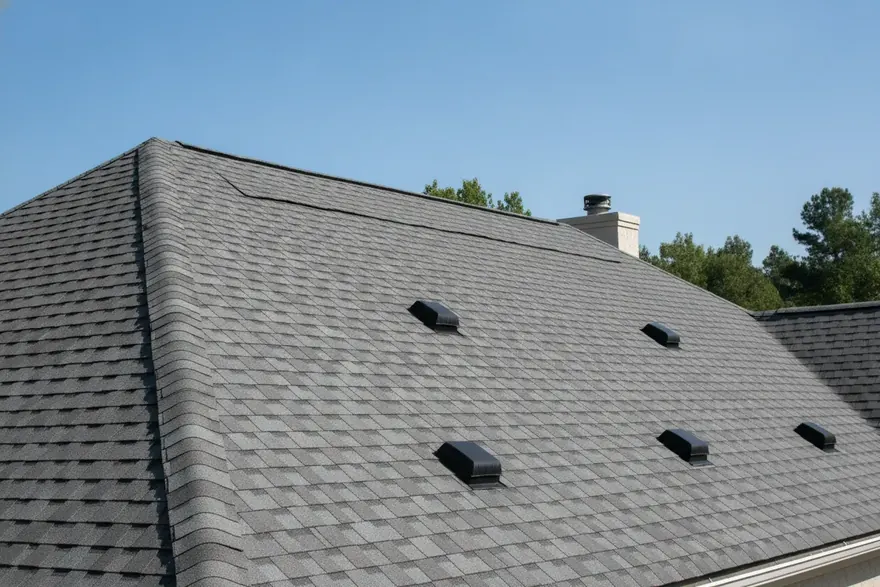
An asphalt shingle is a mat soaked in asphalt and surfaced with mineral granules. The granules are not decoration. They shield the asphalt from sunlight, which would otherwise break it down.
When a hailstone strikes, it knocks granules loose and bruises the mat underneath, leaving a soft spot you can feel with a thumb before you can see it. The Insurance Institute for Business & Home Safety (IBHS) lists the same signs: a random pattern of impact marks, bruising that feels soft when pressed, and cracks or breaks where the hail hit. It also notes that ridge caps are especially vulnerable.
The shingle usually still keeps water out the next day. But the exposed asphalt now ages in the sun much faster than it was built to, and the bruise becomes the point where the shingle eventually cracks. That is why hail damage so often goes unclaimed: by the time it leaks, the storm is long past.
How Big Does Hail Need to Be?
The National Weather Service counts hail as severe at one inch across, about the size of a quarter. Its scale runs like this:
| NWS category | Diameter | Compared to |
|---|---|---|
| Small hail | Under 1 inch | Peas to nickels |
| Large hail | 1 to 1¾ inches | Quarters to golf balls |
| Very large hail | 1¾ to 2¾ inches | Golf balls to baseballs |
| Giant hail | Over 2¾ inches | Grapefruit or softballs |
For roofs, size is only part of it. Hail around an inch can bruise asphalt shingles, and smaller hail driven by high wind can too. An older roof that has already lost granules gives way sooner than a new one. If you saw hail around quarter size or larger, or hail driven sideways by strong wind, the roof is worth a look.
What You Can Check From the Ground
Stay off the roof. A damaged roof is dangerous to walk, and foot traffic can muddy the evidence an insurer needs. Everything worth checking can be done from the ground or from inside:
- Soft metals. Look for dents or spatter marks on gutters, downspouts, vent caps, flashing and the fins of your A/C unit. IBHS calls this collateral damage, and says it confirms a hail event occurred.
- Granules. A pile of dark grit at the bottom of a downspout after a storm is shingle surface that came off the roof.
- Things around the yard. Dented mailboxes, cars, patio furniture or a pocked deck rail tell you the hail was big enough to matter.
- Inside. Water stains or damp in the attic after the next heavy rain.
Photograph anything you find and write down the date of the storm. If you find nothing, that does not clear the roof. Shingle bruising cannot be seen from the ground.
What a Hail Damage Roof Inspection Involves
A proper inspection means someone on the roof. A look from the driveway or a quick drone pass on its own cannot tell a bruise from a stain. Ours runs like this:
- Soft metals first. Gutters, vents, flashing and other metal record the hail size honestly, even when the shingles are ambiguous. Clean soft metals are meaningful too.
- Test squares on each slope. A marked area, typically ten feet by ten feet, where hail hits are counted and photographed.
- The direction of the damage. Real hail hits the slopes facing the storm harder than the others. Damage that is even on every slope usually points to something other than hail.
- The storm date. The damage is tied to a specific dated storm, which is what an insurer needs.
- A written report. Photographs and a plain answer: no damage, a repair, or a claim worth making.
Our inspectors hold Haag certification, the residential roof damage standard many insurance adjusters train against, so the evidence is gathered the way an adjuster expects to see it. We use drones where they help with overall documentation and steep slopes, but they supplement the walk-on inspection rather than replacing it.
Hail Damage or Something Else?
Plenty of roof wear looks like hail to an untrained eye, and an honest inspection tells them apart. IBHS lists the common look-alikes:
| What you see | Hail | Usually something else |
|---|---|---|
| Pattern of marks | Random, heavier on the slopes facing the storm | Uniform wear or discoloration across the roof |
| Granule loss | At impact points, often with a soft bruise underneath | Along the shingle edges: normal weathering |
| Nearby metal | Dented or spattered gutters, vents, A/C fins | Clean soft metals |
| Other marks | Cracks where a stone struck | Manufacturing defects, installation or tool marks |
We would rather tell you the roof is fine than sell you one you do not need. A claim for damage that turns out to be wear costs you time and gets you nothing.
Why Timing Matters
Almost every homeowners policy requires you to report a loss within a set period, and the clock usually starts at the storm, not when you notice the damage. With hail, that is the trap: the damage is easy to miss until a leak shows up years later. Check your policy for its exact terms.
There is a practical deadline as well. The longer the gap between the storm and the inspection, the harder it is to tie the damage to one event, and the easier it is for an insurer to put it down to wear or a later storm. If hail of any consequence fell on your street, get the roof looked at within weeks.
Who to Call After a Hailstorm
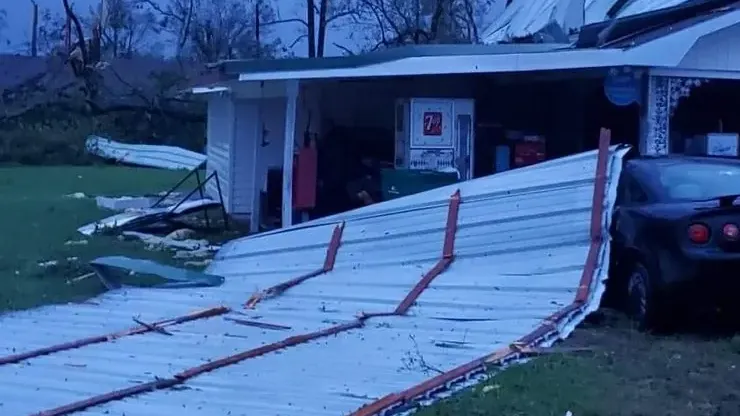
- Your insurer. IBHS says to call your insurance agent first to report suspected damage, and Georgia’s Insurance Commissioner advises homeowners to notify the insurance company of any damage immediately and to “document, document, document.”
- A local roofer for an inspection. Someone with a local address and a track record, who will give you a written report either way.
- A tarp, if water is getting in. Our emergency roof tarping stops the water without committing you to anything else.
Be wary of the knock on the door the day after a storm. Georgia’s consumer office warns that some roofers have used a “free inspection” to damage a roof, and that roofers in Georgia are no longer allowed to pay your insurance deductible. A roofer also cannot negotiate your claim unless they are a licensed public adjuster. We are not one: you open the claim, and we document the damage and meet your adjuster at the property.
Once a claim is approved, the question becomes scope: a few slopes or the whole roof. Our guide to the insurance roof inspection explains what the adjuster decides, and roof replacement cost covers what a new roof runs if you are paying yourself.
We inspect roofs for hail damage across the north metro, including Alpharetta, Milton, Roswell, Sandy Springs and Duluth. Book a free hail damage roof inspection or call (770) 676-1385.
Sources checked November 6, 2026: National Weather Service, Hail Threat; Insurance Institute for Business & Home Safety, Is It Hail Damage?; Georgia Office of Insurance and Safety Fire Commissioner, storm insurance tips (October 29, 2020); Georgia Consumer Ed, Beware of roofers scamming storm victims (January 23, 2017). General information, not insurance advice; your policy and your insurer decide your claim.
Hail Damage Roof Inspection Questions
What is a hail damage roof inspection?
A close inspection of every slope after a hailstorm to find out whether hail damaged the roof, and to document it with test squares, soft-metal dents, photographs and the storm date if it did. It tells you whether you need nothing, a repair or an insurance claim.
How do I know if my roof has hail damage?
Usually you cannot tell from the ground. Dented gutters, downspouts, vents or A/C fins and granules collecting at the downspouts are signs worth acting on. The damage that matters, bruising under the granules, has to be checked on the roof.
How long after a hailstorm should I get a roof inspection?
Within weeks. Most policies set a period for reporting a loss that starts at the storm date, and the longer you wait, the harder it is to tie the damage to that storm.
Is a hail damage roof inspection free?
With RoofMax USA, yes: there is no charge for the inspection, the photographs or the written report, and no obligation to use us afterwards. If you file a claim, your insurer sends its own adjuster to inspect the roof as well.
Who do I call for hail damage on my roof?
Report suspected damage to your insurer, then have a local roofer inspect the roof and give you a written report. If water is getting in, ask for emergency tarping first.
Does hail damage always mean a new roof?
No. It depends on how dense the impacts are and how many slopes were hit. Sometimes it is a partial repair, and sometimes the roof is fine.