Roof Repair
Fixes for damp valleys, worn shingles under overhanging branches and leaks at skylights or vents on shaded slopes.
Roof repair →
Peachtree Corners is one of Georgia’s newest cities, but most of its houses went up in the 1970s, 1980s and 1990s, under the same hardwoods that line the Chattahoochee.
When people think about roofing in Peachtree Corners, the city’s age can be misleading. It only incorporated in 2012 and is known for Technology Parkway and the Curiosity Lab, but the homes themselves are mostly from the 1970s through the 1990s, set in neighborhoods that follow the Chattahoochee River.
That puts much of the city in the same position at once. Houses built over those three decades are on their second or third roof, and the ones replaced in a hurry after a storm years ago are often the first to show it.
Peachtree Corners is roughly 15 minutes from our Alpharetta base, close enough that a free inspection is usually possible the same day or the next. We have worked across the north metro since 2010.
Neighborhoods along the Chattahoochee sit low and green. Mature hardwoods shade much of the roof for most of the day, and with Georgia summer humidity on top, shaded slopes stay damp long after a storm has passed and grow algae and moss faster than open ones.
Trees also fill valleys and gutters with leaves. A valley packed with debris holds water against the shingles instead of shedding it, which is why ice and water shield in the valleys and at wall transitions is part of every roof we install rather than an extra.
Then there are the storms. Spring and summer thunderstorms bring hail and straight-line wind across Gwinnett, and under a canopy the risk is not only hail on the shingles but limbs coming down onto the roof. Branches that rest on or rub the shingles also wear away the granules over time, even without a storm.
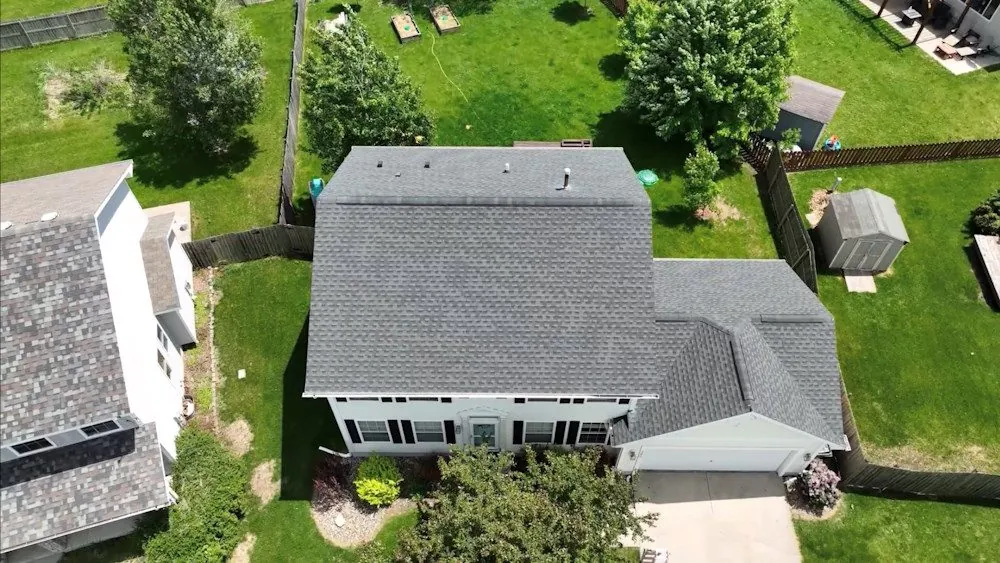
Our replacements are full tear-offs. We never lay a new roof over an old one, because the deck underneath is where moisture from years of shade shows up, and soft boards are replaced before anything goes back on.
From there it is underlayment, drip edge, new pipe boots and flashing, and a check that the attic is venting properly. Around 95% of replacements are finished in a single day, backed by a lifetime workmanship warranty.
Fixes for damp valleys, worn shingles under overhanging branches and leaks at skylights or vents on shaded slopes.
Roof repair →A new roof from the deck up, with valley protection and attic airflow sized for a house that sits in shade.
Roof replacement →Free inspection after a hailstorm or a fallen limb, photographs of every damaged area, and support in person when the adjuster visits.
Storm damage →We cover Peachtree Corners throughout: the neighborhoods along the Chattahoochee, the streets around Technology Parkway and the Curiosity Lab corridor, and the subdivisions toward Norcross and Duluth.
Being this close to Alpharetta means storm damage and active leaks here get a quick response, and routine inspections are easy to fit into the week. Most of our work comes from word of mouth, so we would rather give you a straight answer on a small repair than oversell a big job.
Homeowners insurance generally covers sudden damage, such as hail bruising, shingles torn off by wind or a limb through the deck. It generally does not cover a roof that has simply worn out. On an older, shaded roof both can be present at once, and the claim depends on telling them apart.
That is what a Haag-certified inspection is for. We photograph and document storm damage separately from algae, granule loss and ordinary aging, so the report shows the adjuster exactly what the storm did. Our hail damage repair page explains what we look for after a hailstorm.
If we find the roof is worn rather than storm-damaged, we will tell you that too, so you can plan a replacement without filing a claim that will not hold. Neighbors across the city line can read about roofing in Norcross, where older downtown homes bring their own questions.
Usually only when the leak comes from sudden damage such as hail, wind or a fallen tree. Leaks caused by age and wear are normally treated as maintenance. A documented inspection shows which one you are dealing with before you call your insurer.
A roofer who will find where the water actually enters rather than sealing over the stain. Leaks on shaded, debris-filled roofs often start at a valley, a pipe boot or a wall transition some distance from where the drip appears inside.
It depends on the shingle, the ventilation and how well the valleys and gutters are kept clear. Shade and leaf debris shorten the life of any roof, which is why we recommend architectural shingle and keeping branches trimmed back from the surface.
It means inspecting and documenting what a storm did to the roof, protecting the house from further water, and then repairing or replacing what was damaged. We attend the adjuster visit with you so the documentation is explained in person.
No. The inspection, the photographs and the written report are free, and there is no obligation to book any work afterwards.
Usually the same day or the next, since the city is about 15 minutes from our base. Call rather than emailing if water is coming in so we can prioritize it.
Storm damage isn’t always visible from the ground. We’ll document what we find, walk you through the report, and tell you honestly whether you need a repair, a replacement, or nothing at all.